
Published 19 October 2026 · News
In mid-October our rangers met the two communities of Dungonab Bay–Mukkawar Island Marine National Park, in Dungonab and in Mohamed Qol, to agree together how the new joint patrols will run. They were joined by the Fisheries Administration, the Humanitarian Aid Commission, and our partners SUDIA and the Marine Protected Areas Forces. Both villages have backed the Nature-Positive Patrols, and joint patrols begin in early November.

We held these gatherings because the park is managed together with the people who depend on it. Co-management means the communities share in deciding how the sea is protected, not only in following the rules. Our rangers are few and the park is large, while the fishermen of Dungonab and Mohamed Qol are on the water every day and know every reef and every season. The joint patrols put that partnership into practice.
What we agreed together
- Joint crews: each patrol carries three WCF rangers and two community members, and the community seats alternate each month between Dungonab and Mohamed Qol.
- Open and fair: a patrol plan is shared at the start of every month, and each crew member is paid directly for every patrol completed.
- Community first: if a resident breaks the rules, the first response is a conversation and a warning, with the Omda informed. Only a repeat goes to the authorities.
- Local voices: the awareness campaign will be led from within the villages, through teachers, imams, the fishermen’s sheikh and the local schools.
- Signs built to last: new park signs will be designed with the communities and built from materials that can stand the sun and salt.
Eyes on the water
Fishermen in Dungonab told how they had spotted outsiders collecting sacks of marine life along the shore and reported it, but without fuel and the means to respond, our rangers could not act. That is exactly the gap these patrols are meant to close. In Mohamed Qol, community leaders asked for firm action against spearfishing, which damages the reef and takes the best fish for a few people at the expense of everyone. The Fisheries Administration confirmed that the park’s rules apply equally to everyone who uses these waters, residents and visitors alike.

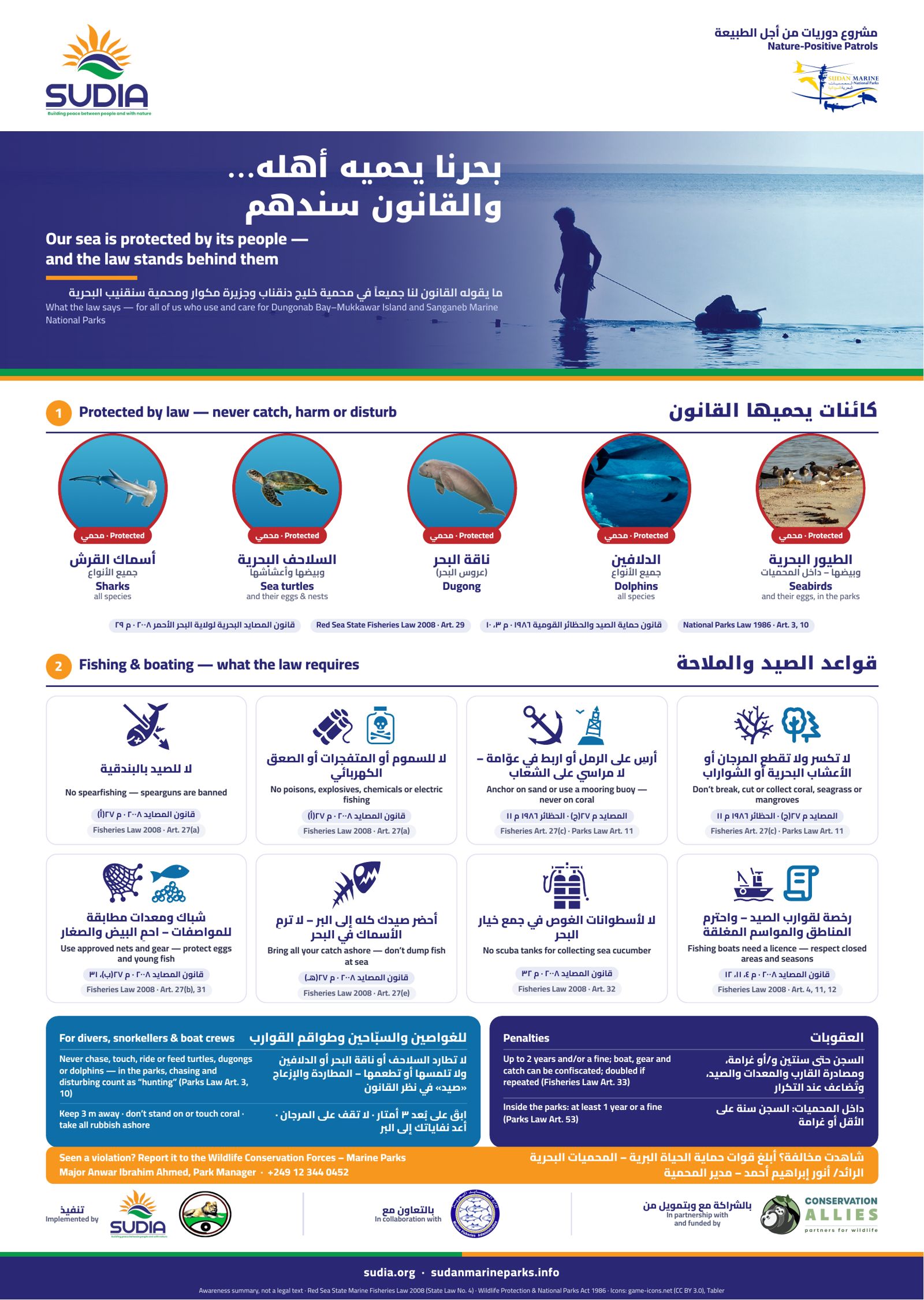
Our sea is protected by its people — and the law stands behind them.
Nature-Positive Patrols
Participants took home copies of the project brochure and a new poster that sets out, in Arabic and English, which species are protected and how to fish and anchor without harming the reef. You can view and download it below.
What comes next
Awareness raising comes next, with community teams in both villages preparing the campaign. The first joint patrols will start in November.

Nature-Positive Patrols is implemented by the Wildlife Conservation Forces (WCF) and SUDIA, in partnership with and funded by Conservation Allies through its Africa Conservation Action Fund (CAFA). Read the full Nature-Positive Patrols project profile.