26 November 2026 · News
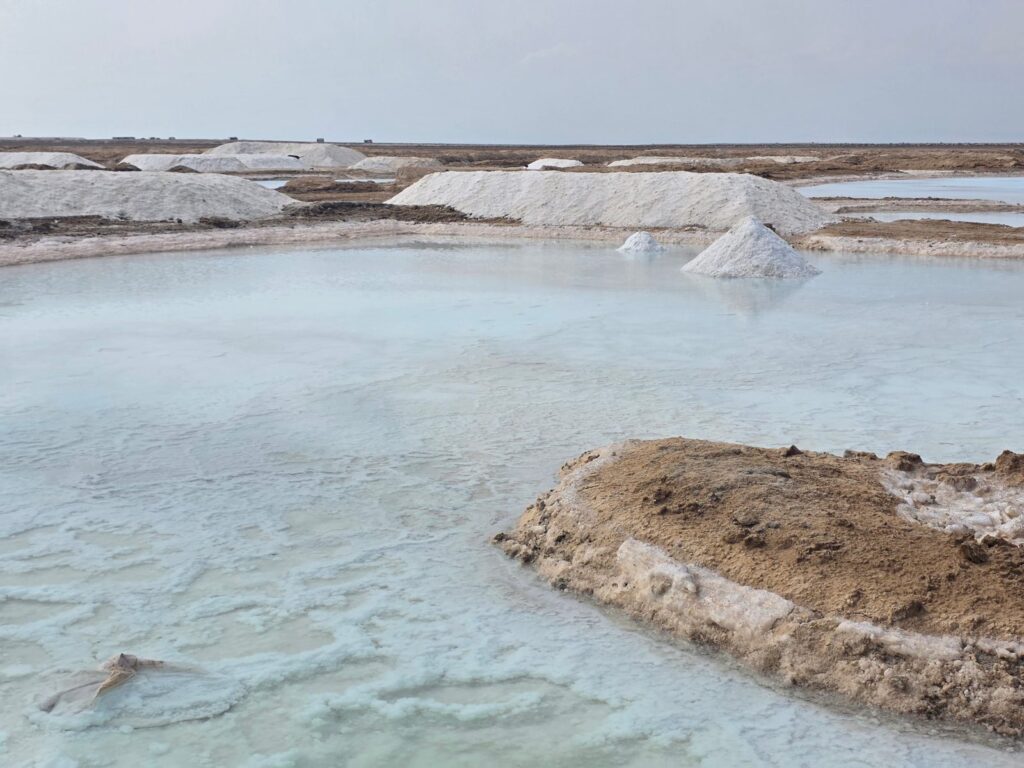
On 25 November 2026, a SUDIA team drove south from Mohamed Qol to the Rawaya salt pans on the Dungonab Peninsula, inside the Dungonab Bay – Mukkawar Island Marine National Park. The visit showed a working salt industry that is more than 150 years old and still supports families in both coastal villages.
The visit at a glance
- When: Wednesday, 25 November 2026
- Where: Rawaya salt pans, southern Dungonab Peninsula, inside Dungonab Bay – Mukkawar Island Marine National Park
- With: a community leader from Mohamed Qol who owns pans at Rawaya
- Why: to accompany him on the long drive to check his pans, and to scope Rawaya as a destination for community-based tourism in the park
- The drive back: 75.6 km in 1 hour 24 minutes
The road to Rawaya
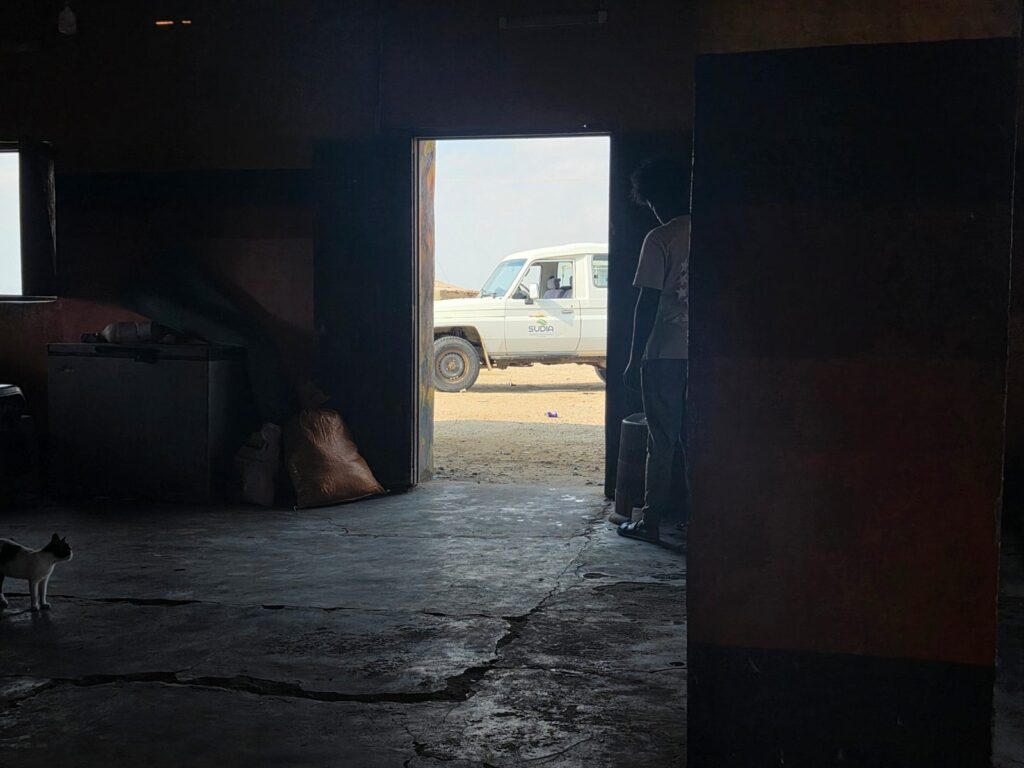
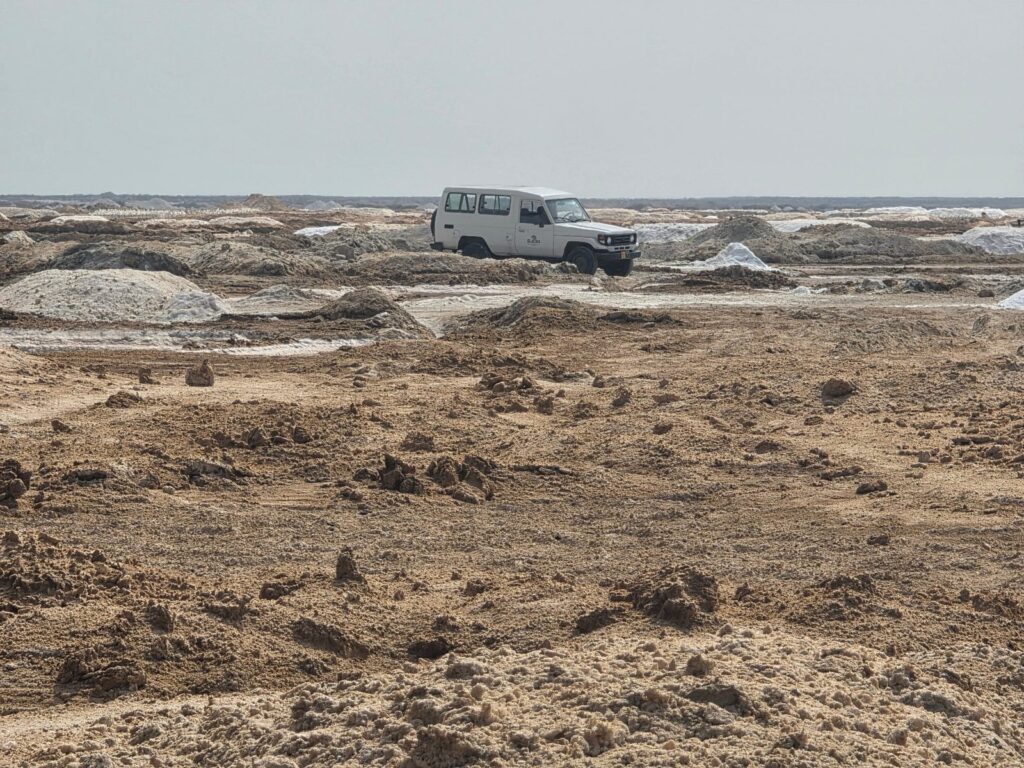
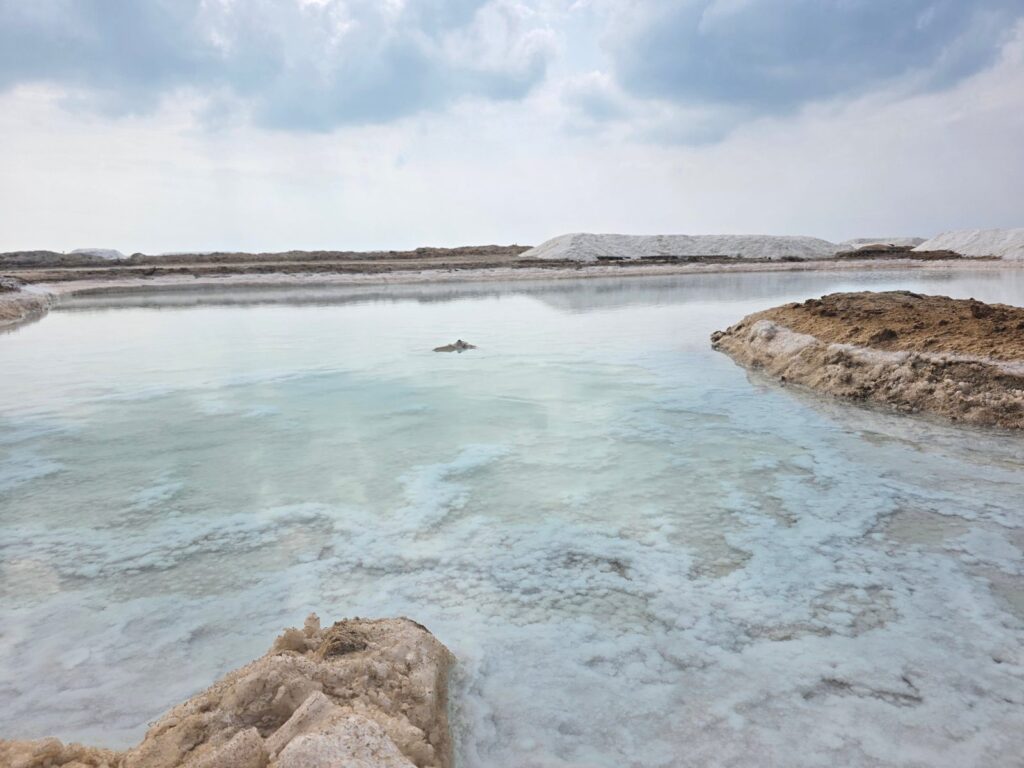
We left Mohamed Qol at about 9 am and stopped for breakfast at a restaurant in Dungonab village. From there the track runs down the peninsula to the pans, a patchwork of shallow evaporation ponds, earth banks and gleaming white heaps of harvested salt.
Swipe or scroll sideways to see more photos →
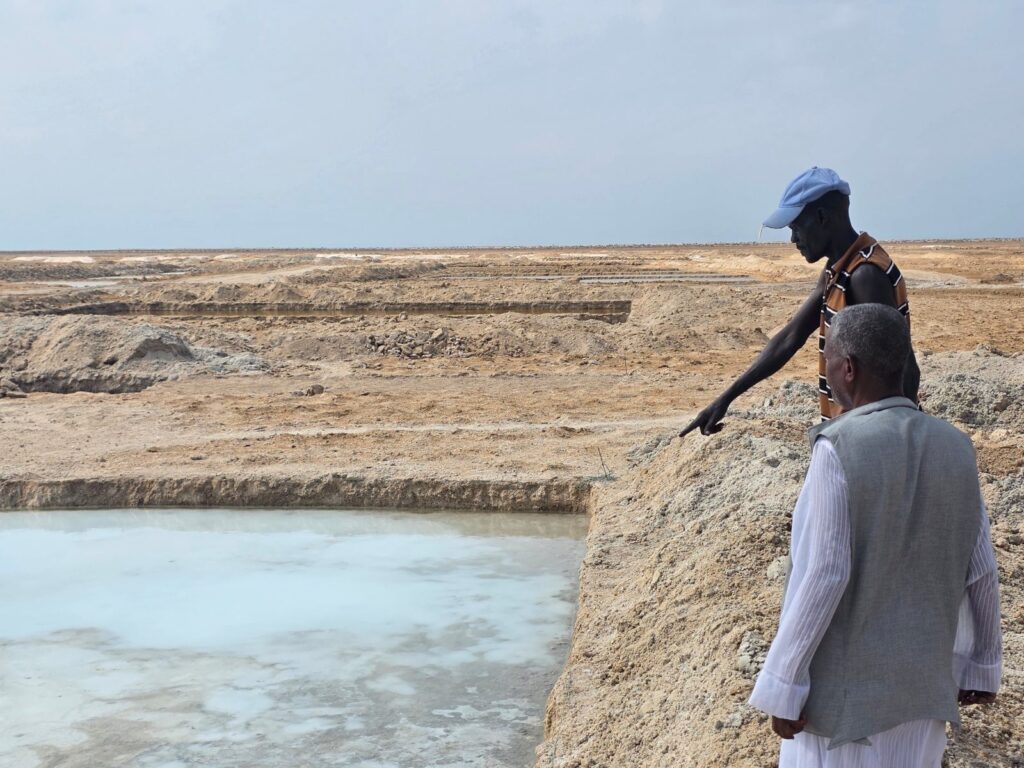
The trip had two purposes. Our host’s pans are far from Mohamed Qol, so an agent manages them for him day to day, and we accompanied him on the long drive to check on them.
The agent walked us along the banks, showing which pans were filling, which were crystallising, and where the next harvest would come from. For SUDIA, the visit was also a chance to scope Rawaya as a possible destination for community-based tourism.
The drive back shows how remote the pans are. Our GPS track looped around Dungonab Bay from the pans to the coast road.
Who owns and who works the pans
Most of the pans belong to families from Mohamed Qol and Dungonab. For them, salt is an alternative livelihood to fishing.
The people who do the daily work mostly come from elsewhere in Sudan, chiefly Kordofan and the Nuba Mountains. They flood the pans with seawater, rake the crystallised salt into heaps and pack it into sacks of about 60 kg.
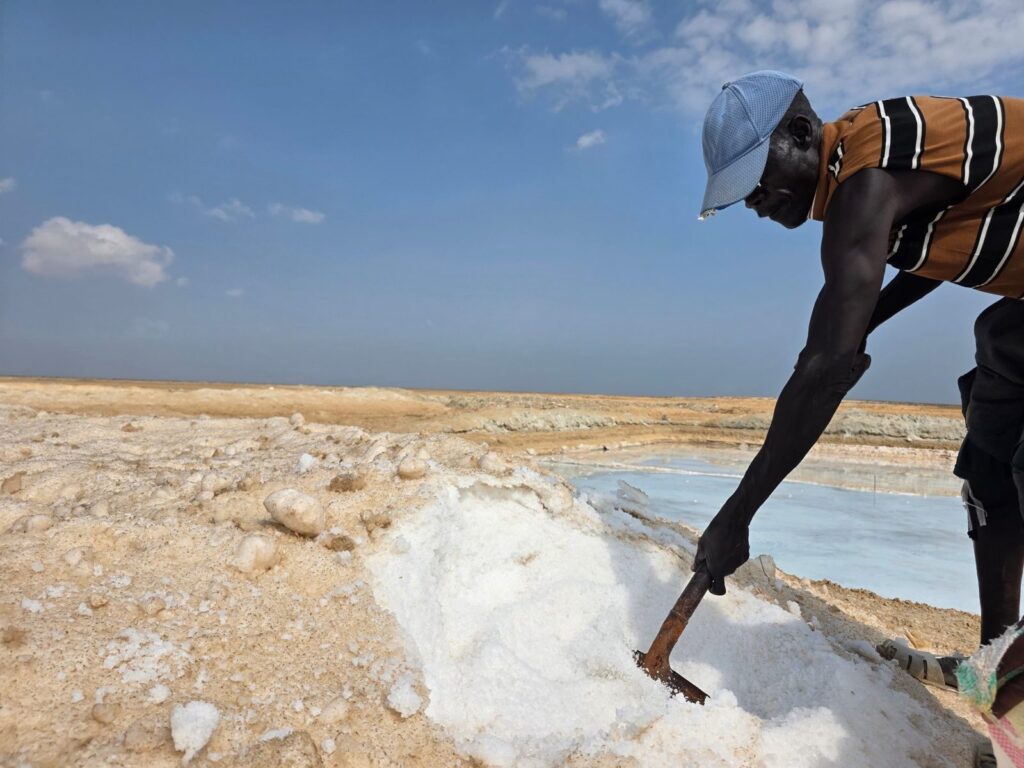
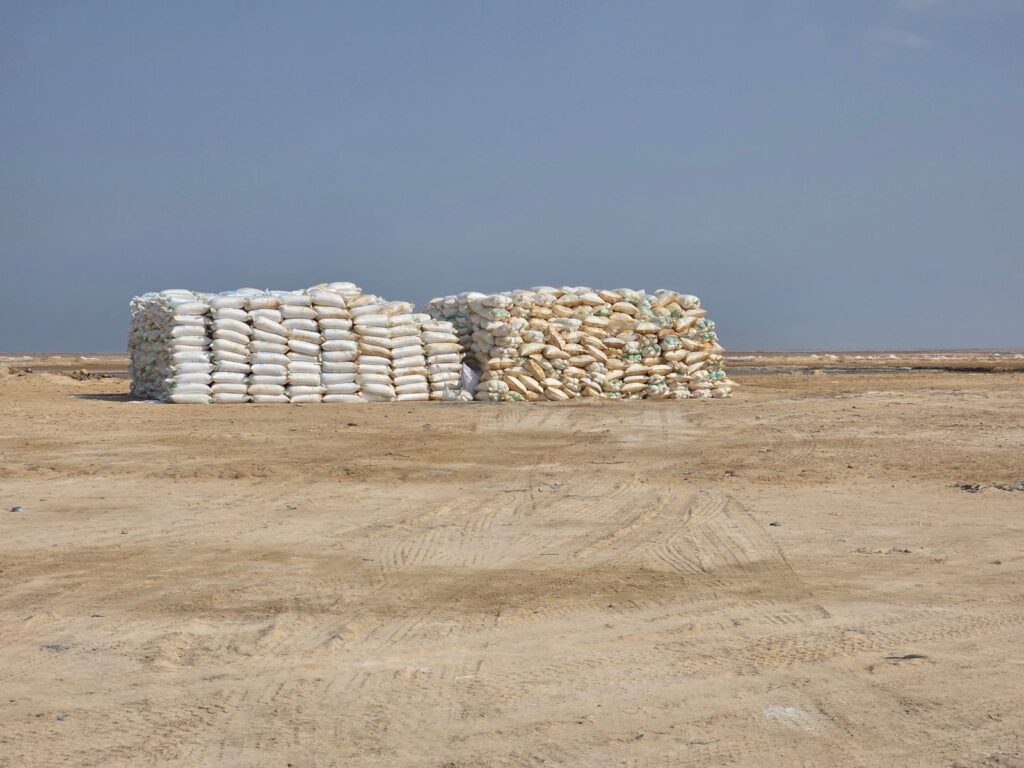
Traders then collect the sacks and sell the salt across the country. The pans therefore support three groups at once: local owners, workers from other regions, and the traders who link this remote coast to markets inland.
The chimney nobody can explain
Above the pans stands a tall old stone chimney, the most striking landmark on the site. It was once part of a larger building that has since crumbled away, leaving only rubble foundations around its base. No one we spoke to knows what it was for or when it was built.
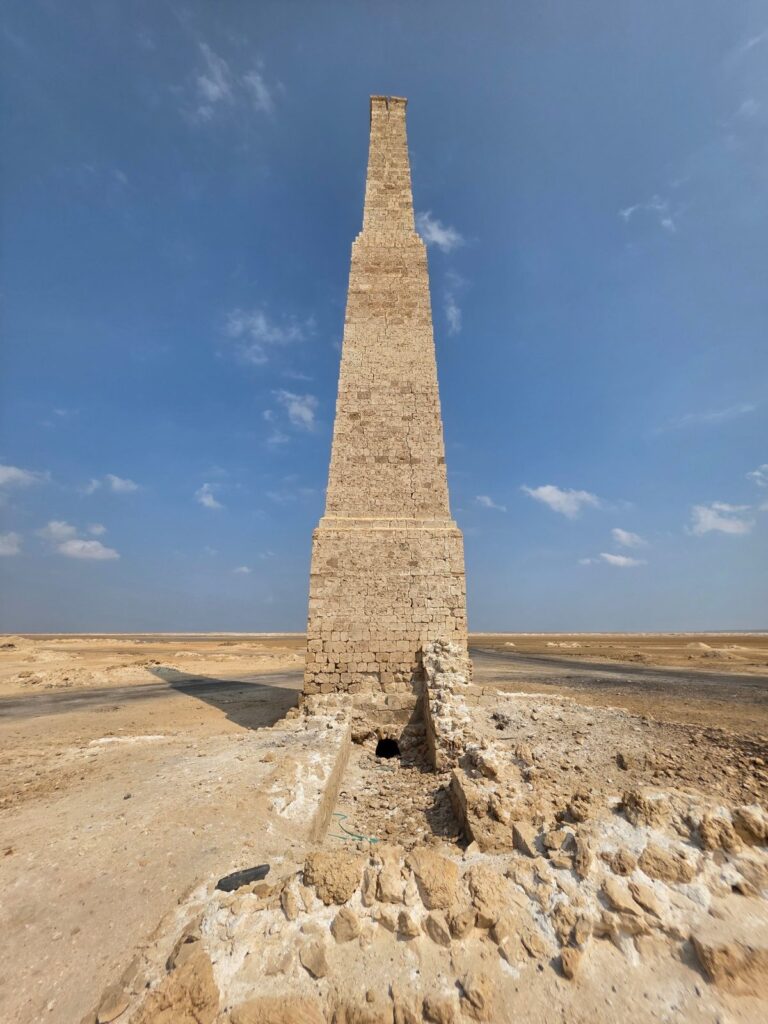
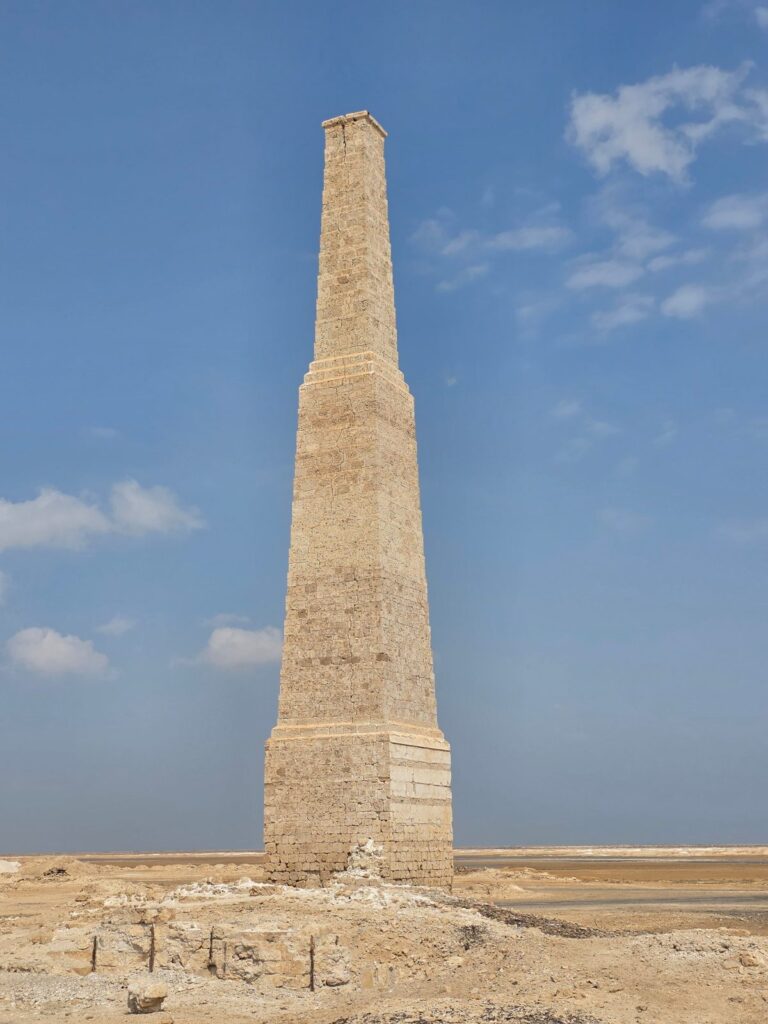
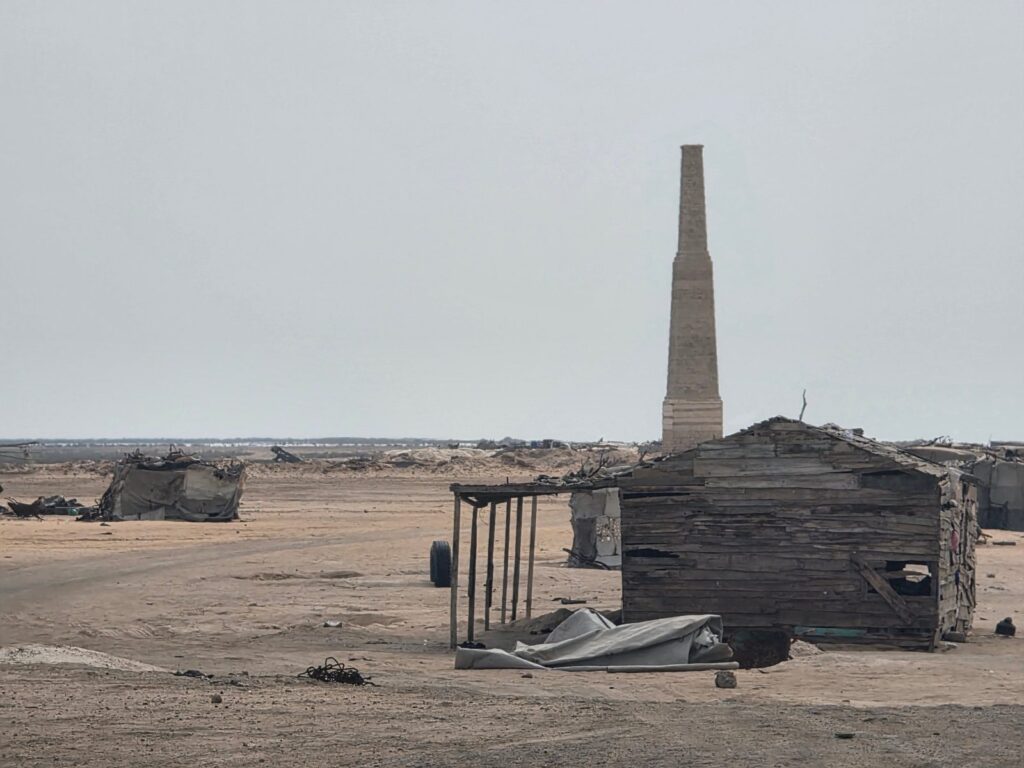
Hover over or tap a photo to open it.
If you know anything about the chimney or the building it belonged to, we would like to hear from you.
A history written in the journals
The Rawaya pans date to about 1870, under the Egyptian administration of the Red Sea coast. The colonial-era journal Sudan Notes and Records traces their story.
The pans are founded. In October 1873 Werner Munzinger, Governor of the Eastern Sudan, listed the Rawaya salt pans first among recent public works, ordered about three years earlier.
Cumming, 1940, p. 237A revenue earner. The Red Sea coast province had the healthiest accounts in the region, thanks to the salt concession at Rawaya.
Cumming, 1940, p. 263Munzinger finds Rashaida families living between Mohammed Ghul (Mohamed Qol) and Agig.
Cumming, 1940, p. 269Interrupted by war. Production stopped during the Mahdist uprising. By the end of 1886 steamers were loading Rawaya salt again.
Sandars, 1935, p. 209A government post is set up at Mohammed Ghul, ending Mahdist activity in the area.
Sandars, 1935, p. 209A Mahdist party is sent to attack Rawaya but is talked out of it by the Amarar leader Mahmud Bey.
Sandars, 1935, p. 209Mohammed Qol becomes one of four police posts dividing the Red Sea coast, with Akik, Suakin and Halaib.
Bloss, 1937, p. 273The pans are still worked, by owners from Mohamed Qol and Dungonab and workers from across Sudan.
Salt in a marine World Heritage site
They show that people and protected areas have shared this coast for generations. That shared use needs care. The 2004 PERSGA management plan for Dungonab and Mukkawar noted mangrove cutting near the salt works and occasional gazelle hunting. Keeping the pans productive while protecting the mangroves, birds and gazelles of the peninsula is part of managing the park well.
Why SUDIA is looking at Rawaya
SUDIA is building community-based tourism in the park as an alternative livelihood, to ease pressure on fish stocks and marine life. The pans, their history and the mysterious chimney could become a visitor experience run by the communities of Mohamed Qol and Dungonab, alongside salt production rather than in place of it.
Sources
- Cumming, D. C. (1940). The History of Kassala and the Province of Taka (continued). Sudan Notes and Records 23(2), pp. 225–269.
- Sandars, G. E. R. (1935). The Amarar. Sudan Notes and Records 18(2), pp. 195–220.
- Bloss, J. F. E. (1937). The Story of Suakin (concluded). Sudan Notes and Records 20(2), pp. 247–280.
- PERSGA (2004). Dungonab Bay – Mukawwar Island proposed MPA: site-specific master plan.
- UNESCO (2026). UNESCO assessment mission to Dungonab Bay Marine World Heritage Site.
Read more about Dungonab Bay – Mukkawar Island Marine National Park.
Support the patrols
Support conservation patrols protecting Sudan’s Red Sea marine parks through Conservation Allies.