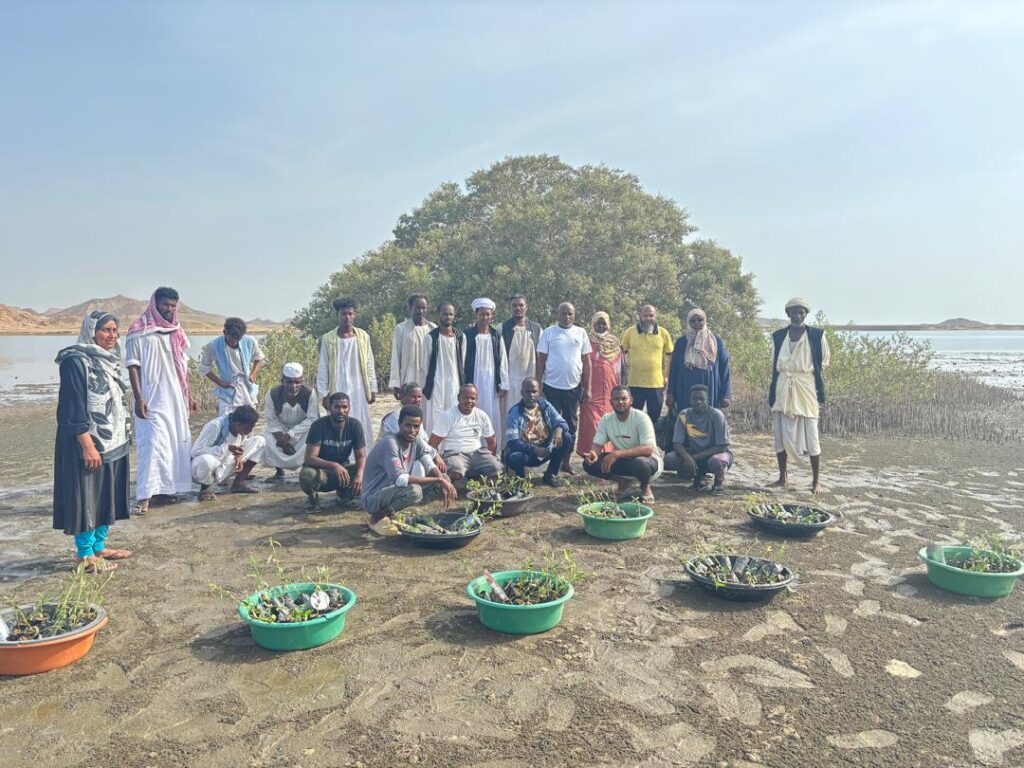
Institutional representatives and local community members gathered at the planting site along Dungonab Bay.
Director of Marine Parks, Wildlife Conservation Forces
Along the shores of Dungonab Bay and Mukkawar Island Marine National Park—a UNESCO World Heritage Site—small and steady efforts are underway to care for our coastal habitats. Under the leadership of the Forests National Corporation, field teams recently completed a modest mangrove replantation activity to help restore localized tidal areas. Implemented as part of the Strengthening Marine Protected Areas Project, this effort brought together local institutions, researchers, and community members for a few days of practical, hands-on conservation work.
Community-Driven Coordination
The strength of this activity lies in simple, close coordination. Working alongside forestry officers, our team at the Wildlife Conservation Forces (WCF), researchers from the Red Sea University’s Faculty of Marine Sciences and Fisheries, and local community members from Dungonab and Mohamed Qol gathered to care for seedlings and plant them out in the mudflats.
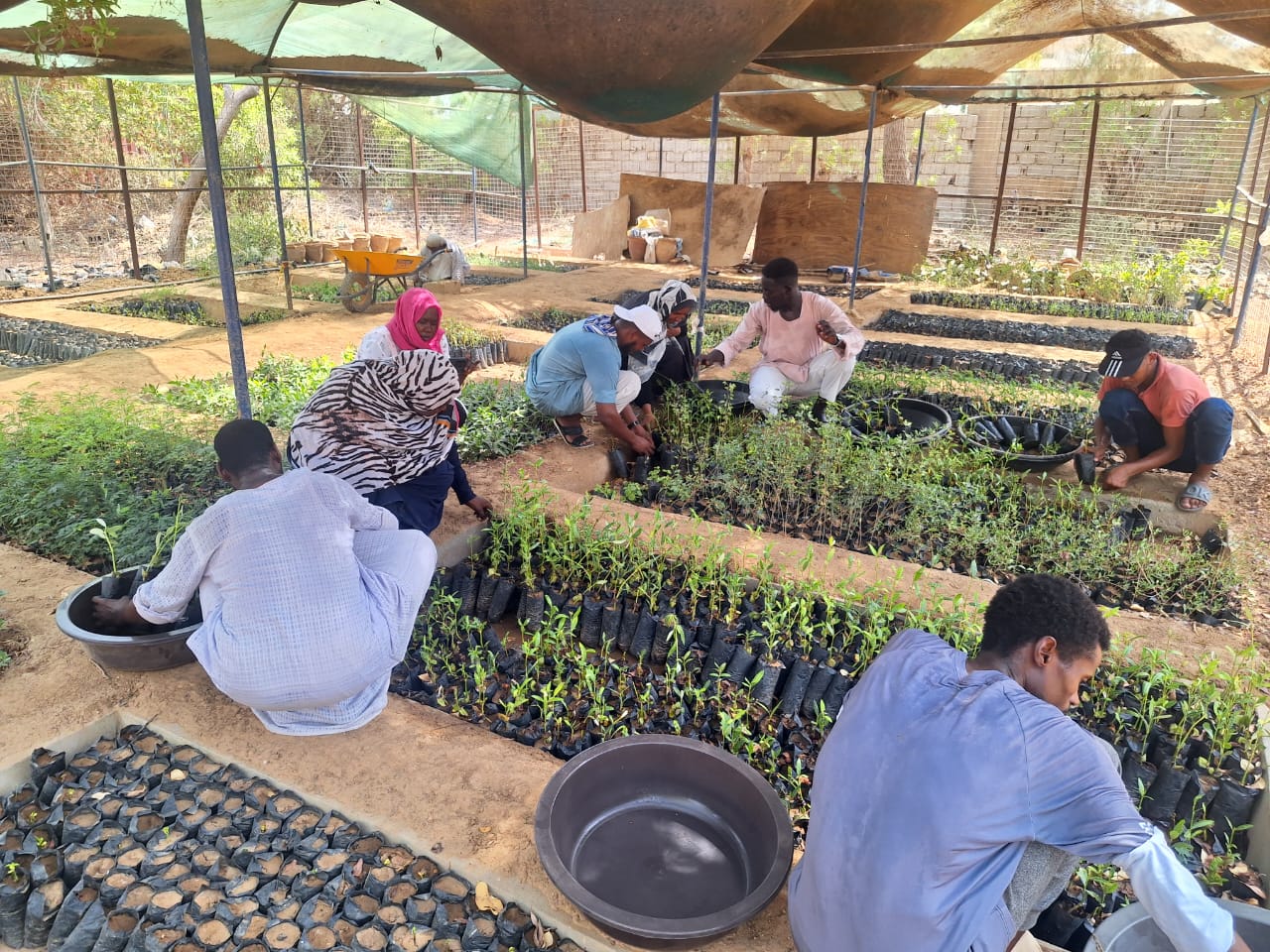
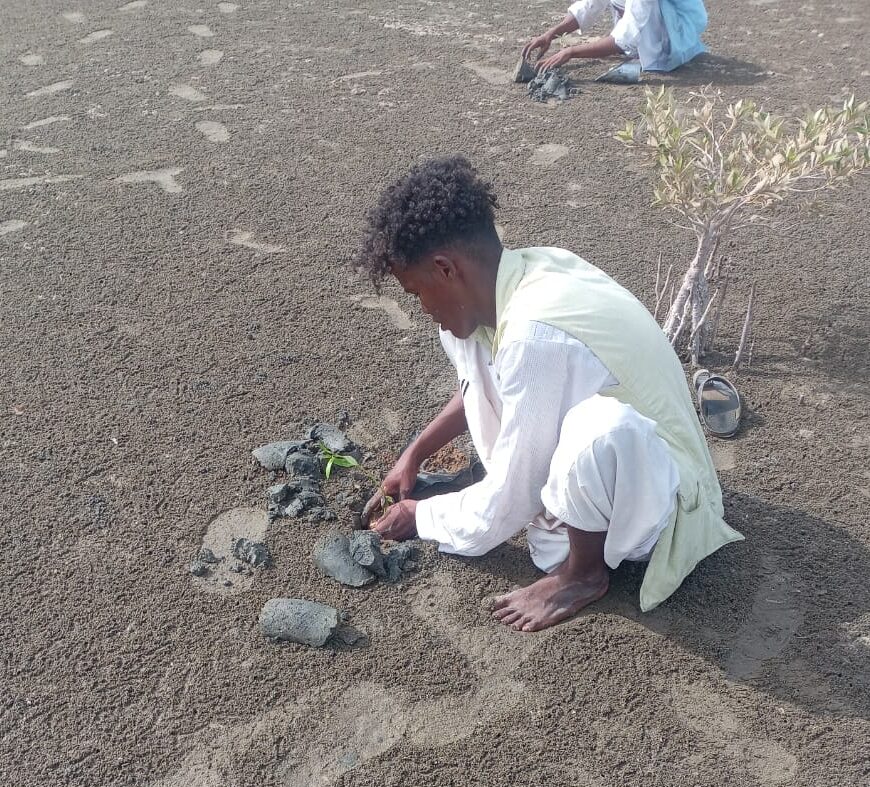
In total, a modest number of saplings were established across several key spots within the protected area:
200 saplings in Khor Shinab,
80 saplings across the Oyster Farm,
380 saplings in Mohamed Qol, and
100 saplings directly in front of the Reserve Headquarters.
“While a few hundred saplings may seem like a small contribution against the vastness of the bay, every young mangrove planted helps anchor fragile shorelines, provide habitat for young fish, and support the broader ecosystem. It is a quiet, practical step, but an important one in maintaining the ecological integrity of this World Heritage Site.”